Add Dermatim as a preferred source on Google
Androgenic alopecia
Androgenic alopecia is a genetically determined loss of hair which occurs under the influence of androgen hormones, at their normal values. Androgens act within the follicles that are located in the temporal regions and on the crown of the head. Initially, there is a shrinking of the hair follicle, which becomes thinner, leading to its complete loss and atrophy of the follicle. In women, hair thinning is more diffuse and limited to the central part of the scalp, with the preserved front hair line. Androgenic alopecia in women has a characteristic thinning of the central part, which is described as a Christmas tree symbol. Therapy consists of minoxidil lotions, finasteride tablets, and, more recently, plasma therapy — PRP treatments of the scalp.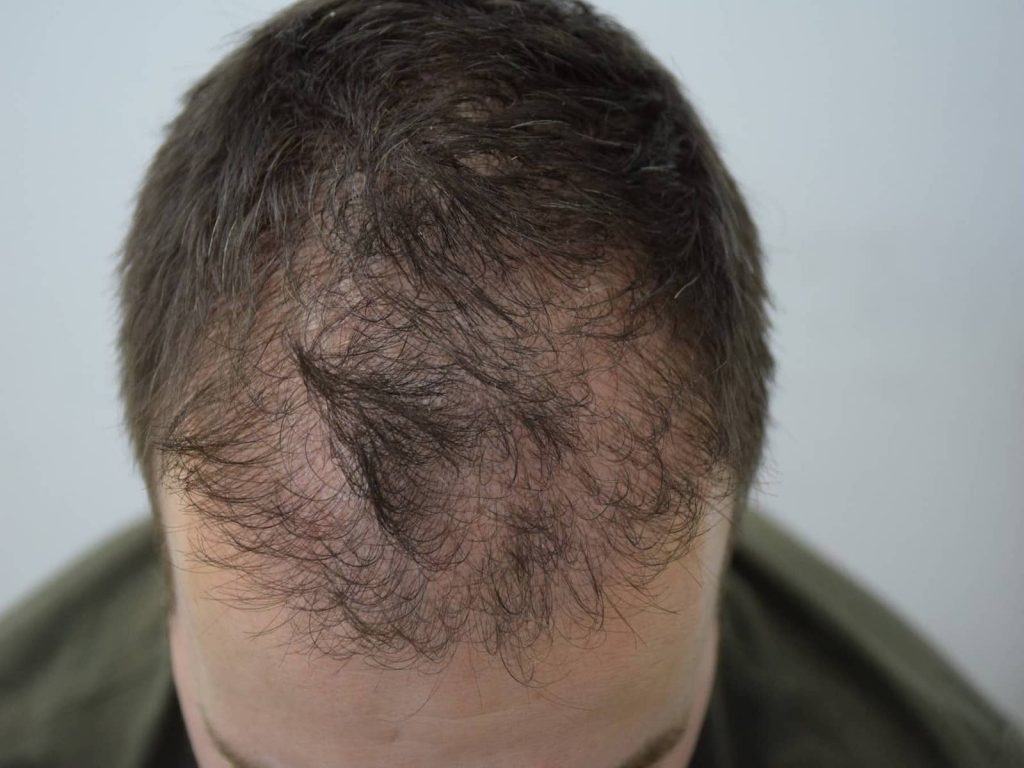
Telogen effluvium
In telogen effluvium, the number of hairs on the scalp that are in telogen phase increases, over 15%. The most common causes are thyroid diseases, iron deficiency, mayor stress or intake of some medications. Diffuse thinning of hair throughout the scalp occurs 3 months after the action of the provoking factor. When the causative agent is eliminated, in the next few months the fall out ceases and the density of the hair improves. If the cause is not eliminated, the telogen effluvium acquires a chronic course.Anagen effluvium
Anagen effluvium develops as a result of a cytostatic therapy or ionizing radiation. Hair can fall out in a considerable amount throughout the scalp, and after discontinuation of chemotherapy the hair starts growing.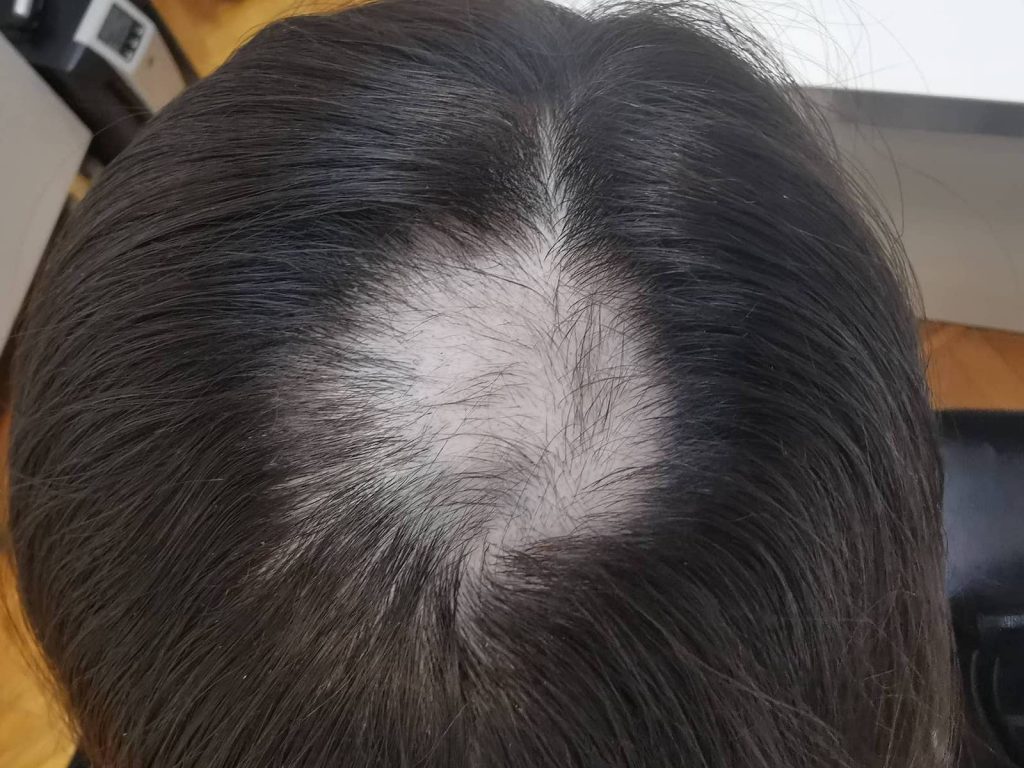
Alopecia areata
Alopecia areata or patchy hair loss is an autoimmune disease of scalp but can also affect other areas covered with hair. For unknown reasons, very often provoked by stress or thyroid disorders, the body begins to reject its own hair root. Affected places become hairless in circular patches. If not treated, it can lead to universal alopecia (Alopecia universalis) – the fusion of the patches and complete loss of the roots of the hair. In the majority of patients with systemic corticosteroid therapy, as well as topical therapy, hair growth is restored.Scarring alopecia
Scarring alopecia occurs due to a permanent damage to hair follicles by an inflammatory process caused by bacteria, fungi or other immune diseases.Trichotillomania
Trichotillomania is an unconscious compulsive hair pulling, present in children or younger people, as a result of obsessive-compulsive disorder. The disorder is transient and harmless, most often provoked by stress.Fungal infections
Fungal infections on the scalp can be very extensive with redness, flaking, hair loss resulting in scarring where the hair stops to grow.Bacterial infections
Various bacterial infections can lead to inflammation that affects the hair root and leads to its permanent damage.Hirsutism
Hirsutism is a condition in women that results in excessive growth of dark or coarse hair, in a male-like pattern. It can be caused by various disorders of sex hormones or adrenal gland hormones. If no hormonal disorders are present, hirsutism is a result of a genetic predisposition.
Schedule an appointment
+381 60 4550 798

Our Services
All types of dermatological examinations and interventions, aesthetic treatments and surgical interventions