Add Dermatim as a preferred source on Google
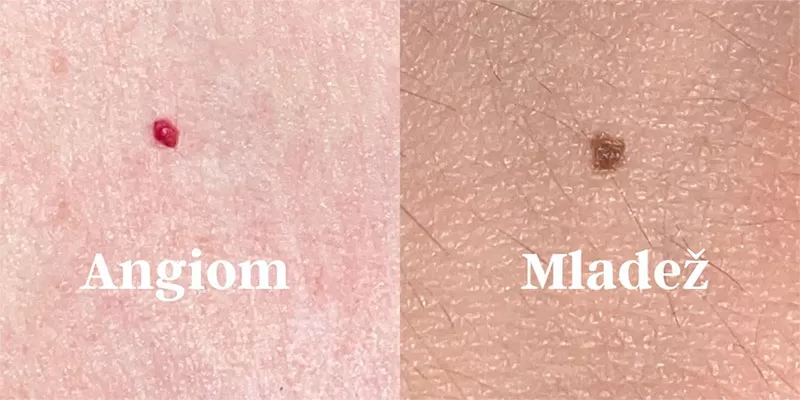
Agniomas – red spots on the body
It is not known why angiomas develop. However, what is known is that there may be a genetic predisposition. Eruptive (sudden) development of angiomas is caused by: Liver diseases Consequences of organ transplantation Lymphoproliferative disorders Human herpesvirus-8 Pregnancy Cytostatic therapies Angiomas are completely benign changes. At the very beginning they look like small flat red dots on the skin, 1mm in diameter. Over time, they can rise above the surface of the skin and look like a part of pea grains. When injured, they bleed heavily. They consist of a tangle of blood vessel and fibrous tissue in between. Sometimes they can look like melanoma without any pigment, so dermoscopy would be necessary and rarely pathochistological analysis to tell them apart. In places of injury, often fingertips, pyogenic granulomas may appear that look like angiomas but they bleed more easily and grow faster. Angiomas (red dots) can be removed differently depending on the size. Removal with radio waves is the most commonly used, always with local anesthesia. Curettage (shave) with electrocoagulation is used for the lesions that are 4 mm in diameter or bigger. ProYellow laser , Pulsed dye laser and CO2 laser are also very successful. In case of lager angiomas a whitish trace will remain after radiofrequency removal. Pulsed Dye Laser does not leave a scar but requires more treatments.Hemangiomas
Hemangiomas are benign tumors that arise from a ball of tiny blood vessels in early childhood or at birth. It is believed that about 5% of newborns have a hemangioma, with a predominance of girls in a ratio of 5:1. Prematurely born children, as well as children who were in hypoxia in the stomach, have a higher probability of developing hemangiomas. Maternal age is also a significant factor. Dominance in inheritance in families has been observed, even if the gene that determines it has not yet been isolated. Hemangiomas on the skin can be superficial, intensely red, or deep when they have a dark purple color. A combination of both is perhaps the most common. When they appear, they go through three different phases:- Rapid growth phase in the first 3 to 8 months of life
- Resting phase between 6 and 12 months of life
- The regression phase lasts for several years. The skin can return to its normal state, but much more often remains with accentuated capillaries, more superficial redness or altered skin structure.
Schedule an appointment
+381 60 4550 798

Our Services
All types of dermatological examinations and interventions, aesthetic treatments and surgical interventions